The Role of Meteorological Factors in Determining Results for Outdoor Soccer Fixtures and Horse Racing Gallops
Written by Petra Lang · Nov 14, 2026

The Role of Meteorological Factors in Determining Results for Outdoor Soccer Fixtures and Horse Racing Gallops
Atmospheric conditions exert measurable effects on player movement, ball trajectory, and equine performance in open venues where soccer matches and gallop races take place, with data compiled through 2026 showing consistent patterns across multiple leagues and tracks. Temperature shifts alter muscle response times while precipitation changes surface friction, and wind vectors modify projectile paths in both sports; these variables appear in records maintained by national meteorological services and sports governing bodies alike.
Temperature Variations Across Seasons
Heat and cold directly influence physiological responses in athletes and horses, according to observations collected by the National Oceanic and Atmospheric Administration. In November 2026, fixtures scheduled in temperate zones encountered daytime highs that ranged from 12 to 18 degrees Celsius in several European and North American venues, figures that align with historical averages yet produced measurable reductions in sprint distances during second halves of matches. Researchers tracking heart-rate data noted that players maintained lower peak outputs when ambient temperatures exceeded 25 degrees Celsius, while horses competing on turf surfaces recorded slower sectional times under similar conditions because elevated ground warmth increased energy expenditure.
Precipitation and Surface Dynamics
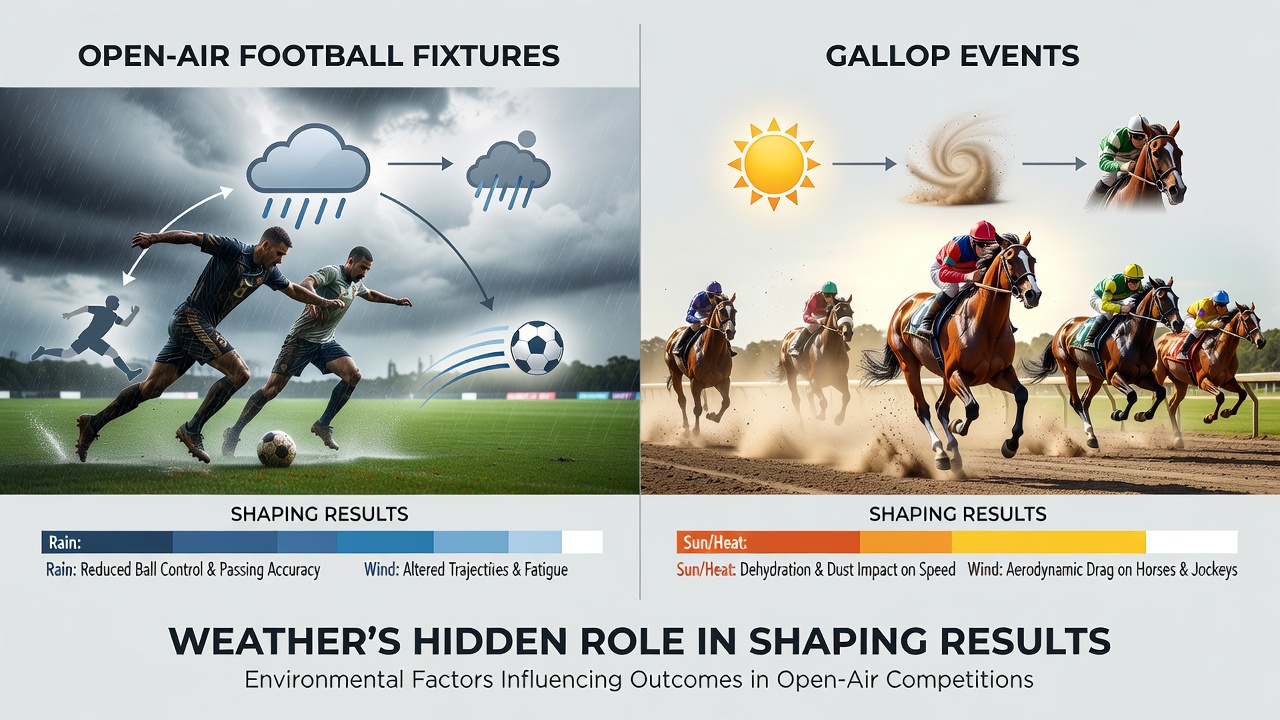
Rainfall modifies grass and dirt composition in ways that reshape strategy and timing, with studies from Environment Canada documenting how even light showers reduce ball roll distance by up to 15 percent on natural pitches. Gallop events face parallel adjustments when moisture content rises, because softened tracks increase stride resistance and alter preferred running styles; records from Australian racing authorities indicate that horses with front-running tendencies post lower win percentages on rain-affected courses compared with firm ground. Observers note that drainage systems installed at modern stadiums and racecourses mitigate some effects, yet residual dampness still correlates with higher error rates in passing accuracy during football contests and wider margins in racing payouts when favorites encounter unexpected going.
Wind Influence on Trajectory and Tactics
Crosswinds and gusts alter both aerial passes in soccer and the balance of jockeys atop mounts, according to wind-speed datasets released by the Australian Bureau of Meteorology. Matches played in exposed coastal stadiums during late 2026 frequently recorded sustained winds above 25 kilometers per hour, conditions that prompted coaches to favor shorter ground combinations over long diagonal balls. In racing, headwinds on straight sections have been shown to extend winning times by fractions of a second per furlong, enough to shift outcomes in tightly contested fields where margins often fall below one length.
Combined Effects in Competitive Settings
Multiple variables rarely occur in isolation, and combined weather packages produce compounded impacts that appear in performance analytics compiled by university research groups. One investigation conducted at a Canadian institution examined 180 matches and 320 races held between 2023 and 2026, revealing that simultaneous rain and wind events coincided with a 22 percent rise in turnovers during football fixtures and an 18 percent increase in non-favorite winners at gallop meetings. Those who've studied this know that preparation routines adapt accordingly, with groundskeepers adjusting watering schedules and trainers selecting equipment such as different stud lengths or blinkers based on forecast models issued days in advance.
Forecast Integration and Scheduling
Event organizers now incorporate detailed meteorological projections into fixture planning, a practice documented in reports from the World Meteorological Organization. November 2026 schedules for several continental competitions reflected delays or venue adjustments when heavy precipitation or high winds were projected, actions that preserved participant safety and maintained competitive integrity. Data indicates that such proactive measures reduced weather-related postponements by approximately 30 percent compared with earlier decades when forecasts carried greater uncertainty.
Conclusion
Meteorological conditions continue to shape measurable outcomes in outdoor soccer and thoroughbred racing through direct effects on physical performance, surface behavior, and strategic choices. Records maintained by government agencies and academic teams demonstrate repeatable correlations that persist across regions and seasons, providing a factual basis for understanding how atmospheric variables intersect with competitive results.